
 Pragmatic Play
Dog House Demo Bonus Buy 2026 – Price, Top Games and The Dog House Slot Data
The feature buy turns a rare event into an instant one, for a fixed price. The only question is what the money buys, and the answer comes from run data rather than from advertising: at 100× the total bet for a round, the median bonus across the series pays back 32× to 47×.
What the bonus buy is
Instead of waiting for scatters to land, you pay a fixed amount and the bonus round starts immediately. The standard price across the series is 100× the total bet for ordinary free spins; enhanced variants cost 200×, 500× and as much as 2,500×. One buy therefore costs the same as a hundred ordinary spins, and the dearest costs as much as two and a half thousand — at €4 a spin, that is €400 for a standard round and €10,000 for the most expensive one in the series. Every price below is taken from the rules screen of the game itself, not from other reviews. The buy button sits beside the reels and shows the cost in your current bet: raise the stake and the price of a round rises with it, in the same proportion.
Which games in the series have it
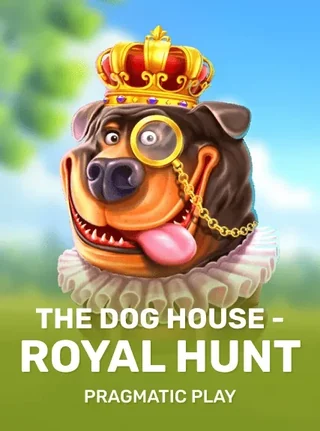
A buy with a confirmed price appears in the rules of four games in the series. Megaways — 100× the bet, and a bought round drops between 3 and 6 scatters. Royal Hunt — 100× for ordinary free spins and 500× for the royal ones, where wilds carry ×10 and ×20 multipliers instead of the usual ×2 and ×3. The Big Dog House — 100× for a plain round, 200× for a version with the BIGGIE or GHOST OUT modifier and 500× for both at once. Megaways 1000 — the steepest price list in the series: 100× for ordinary free spins, then 500× and 2,500× for super spins.
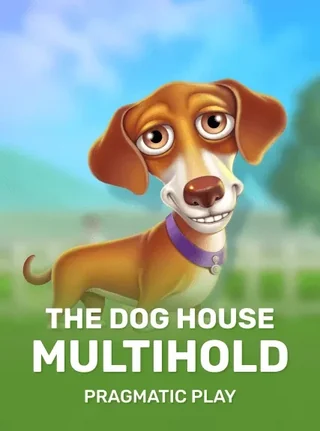
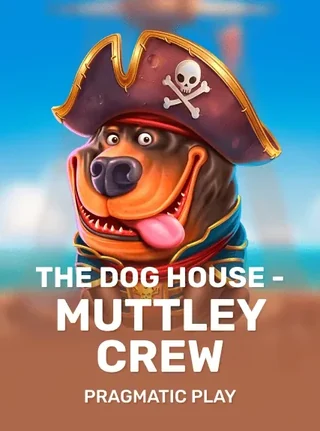
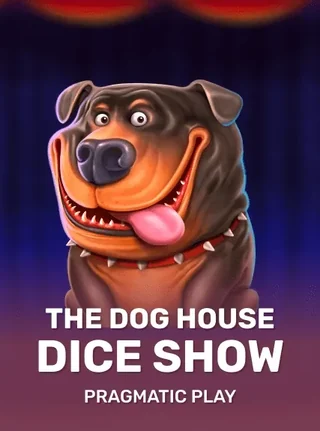
Multihold and Dog or Alive charge 100× each: we opened both games and checked the button ourselves, and it asks for exactly a hundred times the current total bet — €400 on a €4 spin. On the flagship, Muttley Crew and Dice Show we found no buy price stated in the rules; on top of that, several jurisdictions ban the feature outright and the button is not rendered at all. The dependable check is the game itself: if the buy is available, the price is written on the button. In demo mode you can try it on virtual money.
| Game | What you buy | Price (× total bet) |
|---|---|---|
| Megaways | Free spins (3–6 scatters) | 100× |
| Royal Hunt | Ordinary free spins | 100× |
| Royal Hunt | Royal spins (wilds ×10 and ×20) | 500× |
| The Big Dog House | Plain round | 100× |
| The Big Dog House | With BIGGIE or GHOST OUT | 200× |
| The Big Dog House | Both modifiers at once | 500× |
| Megaways 1000 | Ordinary free spins | 100× |
| Megaways 1000 | Super spins | 500× and 2,500× |
| Multihold | Free spins | 100× |
| Dog or Alive | Free spins | 100× |
| The Dog House, Muttley Crew, Dice Show | No price stated in the rules | — |
Proof: one game, different returns
The usual line about the feature buy is that "RTP is slightly higher", with no figures attached. In The Big Dog House the figures are printed in the rules, and they are worth reading. The base game returns 96.53%. An ordinary free spins buy returns 96.54% — effectively the same thing. The buy with the BIGGIE modifier drops to 96.50%, and the GHOST OUT buy to 96.43%, the worst return anywhere in that game. Only the most expensive option, both modifiers together for 500× the bet, comes out ahead at 96.56%. The conclusion is straightforward: buying a bonus does not make a game more generous by itself, and some variants of it are plainly worse than simply spinning.
| The Big Dog House: what you play | RTP |
|---|---|
| Base game, no buy | 96.53% |
| Plain free spins buy (100×) | 96.54% |
| Buy with BIGGIE (200×) | 96.50% |
| Buy with GHOST OUT (200×) | 96.43% |
| Both modifiers (500×) | 96.56% |
Does buying pay for itself over the long run
Usually not: the median bonus round returns noticeably less than the price of the buy. Take the real numbers. A standard round costs 100× the bet. In aggregated run statistics for the series the average bonus pays 89× to 95× — already below the price, which is what you would expect from a game returning around 96%. But the average is not the story: the median round is far more modest at 40× on the flagship maths, 47× on Megaways and 32× on Dog or Alive. Half of all rounds give back less than half the price, and the average is dragged up by rare large hits. (The statistics come from rounds that triggered naturally, but the maths of a bought round is the same.)
The real trap is that a bonus feels like a guarantee, when the only thing it guarantees is that the free spins will start — not what they will produce. A buy is neither good value nor bad value; it compresses time. You pay a hundred bets for an event that arrives on its own once every 176 to 371 spins depending on which game in the series you are playing, and you accept exactly the same spread of results, only sooner. The simulator on the game pages shows that spread directly: how many rounds finish below the price paid, and how rare the one big round really is.
What to do instead of guessing
Run the demo on The Dog House page and buy the bonus a few times on virtual money — it costs nothing and shows the spread honestly. Then compare that against the simulator over a thousand spins, where you see what ten attempts can never show you. Where the simulator gets its parameters, and why we do not trust single runs, is set out in our method.